ARC Review | The Last of Earth

4 stars

One of my biggest dreams is to fly to Nepal and hike to Everest Base Camp. Reading this gave me so much imagery for that, though the characters in this are journeying to Tibet. It is very image driven – there are so many descriptions of the landscape and weather, you really feel as if you are there.

Back in the late 1800’s, Tibet was closed to all outsiders except for Indians looking to trade goods and make pilgrimages. During this time, many foreigners tried sneaking across the border, whether for their own ambitions and glory, or because they were hired by their governments to spy. The book follows two parties that are heading to Tibet, both of which have a foreigner trying to sneak in. One features Balram, who is guiding an English captain who wishes to map the Tsangpo River. Along with them are several other bearers, who help to carry the supplies, shepherd the sheep brought along, cook the food, and whatever else is necessary to complete the trip. The second follows Katherine, a half English, half Indian woman who wishes to be the first woman to see Tibet. She has hired a guide by the name of Mani to help her.

The story can be incredibly slow at times, as it is very character and image driven. Though there is the plot of each team trying to reach Tibet, it’s almost second to the characters themselves. You learn a lot about Balram and his bigger reason for joining the captain, Katherine and how she’s felt out of place for much of her life, and a mysterious man named Chetak, who appears to help both parties at times. There are so many descriptions of the landscape and the trials of traveling through such harsh land. There were no modern conveniences that people today would have available; it is all tents (if everyone was lucky enough to sleep in one), carrying all the supplies and food for the entire trip, no other modes of transportation besides walking. Even mountain trekkers today generally have the luxury of towns along the way with inns and fresh food. There is tension and a few accidents, but for the most part there is very little action.

I really enjoyed the descriptions of the land and hardships of trekking. The characters were all well done and you could really understand their reasonings for what they do. It’s a great book for anyone who enjoys descriptive, character driven historical fiction, but those wanting a faster pace may struggle with this.

ARC Review | The Copywriter

3 stars

If I could pick one word to describe this book, it would be pretentious. I’ve never been a fan of books where the characters have an over-inflated sense of self and try to say things that sound super deep but are really nonsense. Someone saying they are a journalistic language sculptor and then going on to describe what that means – how they went to Germany and trekked through a forest every day to masturbate into spiderwebs and therefore cum is speech because the etymological root of semen is ‘seed’ is wild. Also, I didn’t think the sentence “is your cocaine gluten free” would be something I’d ever read. And can someone explain to me how Lord of the Rings is supposed to be anti-Semitic? Because that one makes no sense.

The first half follows the narrator as he discusses his life with his girlfriend, a few close friends, and his job. There are some quite eye-roll inducing sentences (see above), but nothing profound. The second half of the book was more enjoyable than the first. It was a bit more relatable, with the narrator trying to figure out what do after he loses his job and girlfriend, then embarks on a road trip while blowing through his savings to try and find himself. The writing is better, the sentences less awkward (though there are still a few), and it doesn’t drag quite as much.

I think this book will appeal to a very specific audience, which I am not a part of. I can see what the author was trying to do, but it really isn’t my cup of tea.

ARC Review | Room to Breathe

3 stars

I didn’t love this, or even really enjoy it, and I’m not sure exactly why, especially because I generally really like Kasie West’s books. Maybe it was because I didn’t connect with any of the characters? Maybe I didn’t enjoy the ‘then’ and ‘now’ writing structure? Or maybe it’s because in the book Indy talks about how her parents were supposed to go to San Diego for her mom’s 40th birthday, which is exactly where I’m going in two months for my 40th birthday.

The book focuses on Indy and Beau, two best friends who quit talking to each other for an unknown reason. The ‘then’ parts of the book help establish their friendship with each other and their other two best friends, Ava and Caroline, while the ‘now’ chapters focus on Indy and Beau being trapped together and being absolutely miserable over it. The ‘then’ chapters slowly work through the mystery of why they quit talking, and the ‘now’ chapters slowly work through them talking again. Dual timelines can work really well, and I’ve enjoyed books that feature them before, but sometimes they just don’t do it for me, and this was one of those times. I found myself getting rather frustrated and just wanting to skip ahead to find out what happened.

I did understand the feeling of not talking to a best friend for months over something that ended up not being a big deal. And while Indy and Beau hash it all out, there isn’t quite the same resolution with Ava and Caroline. I also couldn’t really figure out why Ava and Caroline so easily joined Beau’s side. Like, it was mainly an argument between Beau and Indy, and when Ava and Caroline found out they immediately sided with him and didn’t give Indy a chance to explain anything or bother to ask her what was really going on. I get that part of that was Indy’s fault for being secretive, but she was also trying to keep a promise she made to her parents. And when things start coming to light, they still didn’t bother to talk to Indy about it. It was all kinda weird, and the ending just didn’t sit right with me.

Even though I didn’t love this, Kasie West still has a good track record and I’ll continue to read her work. She’s one of the few YA authors I’ll always go back to, even as I am involved less and less with the genre.

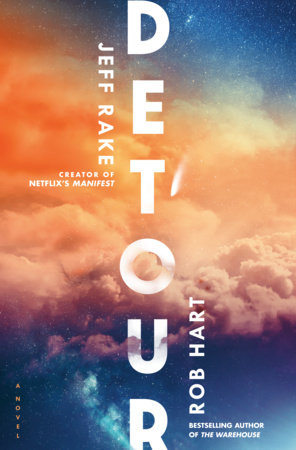
ARC Review | Detour

3 stars

Have you ever watched the original Star Trek series episode “Mirror, Mirror”? Cause this is a lot like that, just with less gold sashes and sexy outfits.

I love the idea of this book – a crew heading to Saturn’s moon Titan to see what awaits them. Titan potentially holds more promise for life and as a future human settlement, due to having liquid hydrocarbon lakes on the surface, weather patterns, and surface features similar to Earth. However, the crew and training they received is totally farfetched. There’s no way a crew of 6 people – with only 3 being actual astronauts and the other 3 being civilians with no training – would get only 5 weeks to train together before being blasted into space. Armageddon, is that you?

It is also a bit disappointing that for being a space book, very little actually happens in space. Almost half of the book is taken up by introducing us to our overly diverse but extremely stereotypical characters. It’s like the authors were trying their absolute damndest to make sure they got every conceivable diverse character in the book, and then used the absolute basics for each of their characterizations. I don’t think they could have gotten more cliche if they tried. They are all selected by Jeff Bezos – I mean John Ward – to take a trip to Titan, which is supposed to herald in a new era for humanity and space travel, but then we never get to see any of it. We read about the launch in a news report, and then it jumps immediately to them being just a day or two from Titan. There is an issue on board, which takes all of 30 pages, if that, and then skips right over the journey home. There isn’t really a lot explained during their crisis around Titan. You get a quick explanation of what they think is happening, some macho chest puffing between Stitch and Mike, Ryan and Padma acting eerily like Cooper and Brand from Interstellar, then bam! it’s all over. Once they’re home, it’s the Mirror, Mirror episode with a bit of Dan Brown’s Robert Langdon puzzle thriller thrown in. It really feels like the authors watched Star Trek and Interstellar and read lots of Dan Brown and decided to throw them all together. Not that it’s bad – it’s just easy to see all these influences throughout the book.

There is a cliffhanger at the end, but not as dramatic as I thought it would be? I will probably read the sequel to see what happens, as I’m curious to see where this all ends up.

Sparkly gold, toned arms, and abs oh my!

ARC Review | Is This a Cry for Help?

-5 stars

DNF at 49%

Buckle up, cause this is gonna be one of the most rage filled reviews I’ve written in a while.

If I could give this book negative stars I would. The first chapter really set the tone for this book. Right off the bat, there is a man watching porn loudly in the library, And when someone complains to Darcy, she almost gets offended over it, because it’s a public library. Like, what? Her library has absolutely no rules regarding watching porn (with the exception of child porn), which is wild. I thought most libraries did, because, you know, children. And just because you’re in a public library shouldn’t mean you can do whatever you want, because most public places do still have rules, as well as cities, counties, and states having laws. I’m just astounded that that is a thing and that no one seems bothered by it. Her wife asks if the man watching porn had been masturbating if she would have kicked him out, and she says no because she doesn’t get paid enough. Later in the chapter, a reporter comes to the library to ask about the porn policy. Darcy seems more offended that he’s outraged that it’s allowed than at the actual person watching porn loudly, and gives him a lesson on libraries being democratic institutions. When he states she should pray after she informs him she can recommend philosophy or theology books if he wants to explore the question of God – as in pray for guidance because she is okay with people watching porn in libraries – she takes it as a threat. I would like to note that I looked up the policies and guidelines for all my local libraries, and they all have rules for internet use, which includes technology protection that is “designed to block or filter visual descriptions that are child porn, harmful to minors, or obscene, without, in as much as possible, infringing on the rights of patron’s access. They may not use email, chatrooms, social media and such to view sexually explicit material.” Cause, you know, children.

In the next chapter, we see that the reporter has written a story about the library. And while I don’t agree with him calling them communist sex dens, I do mostly agree with the sentence they “allow perverts to watch depraved sex acts next to our children and grandmothers.” While it isn’t specifically stated who is around him, there are others around, which could easily have been children or grandmothers, or people who simply don’t want to witness that in public. Darcy laments that the reporter, Declan, appears to be her age, and they most likely grew up exposed to the same school curriculum, news, and pop culture, and is disturbed that he turned out the way he did. Ma’am. Respectfully, what the fuck? I love my local library system. I use it all the time. I pay for it with my taxes and vote yes for the tax that continues to fund it along with art institutions, parks, and zoos. I do not want my taxes paying for people to watch porn. But luckily I don’t have to since they don’t allow it.

Moving along, at one point Darcy is in the bathroom and a coworker is trying to get a hold of her for a situation. Darcy states that she finally answers because she is annoyed at being shouted at in the sanctity of a public washroom stall. What about being subjected to someone else watching porn loudly in the sanctity of a library, which is supposed to be a quiet, safe space? And then a patron curses a few times because she couldn’t figure out what happened to her printing job, and later Darcy is talking to her wife about it. She states that she didn’t have to help her, because she doesn’t have to help patrons who swear at her and that there’s a code of conduct that states patrons can’t swear at employees, among other things, and she could have asked her to leave. Soooooo… you’re offended that someone swore at you and should have told them to leave, but you wouldn’t make someone who is masturbating leave, and had no problem with the porn thing? And your code of conduct says people can’t swear but there’s nothing against porn? Got it. That makes total sense. And then she moves to complaining that she hates it when attention is focused on seedy, unconstructive things instead of the good stuff. And it’s only been 4 chapters.

When Darcy has friends over and they question the porn policy, she sidesteps by first going on a tangent about how the erosion of social services is the problem and then asking what the definition of porn is, whether it should only be accessible to people who can afford home internet or personal devices, and whether it’s fair that poor people can’t watch it and that its privileged content only for those who can afford it. Her friend states that she doesn’t see why anyone would need access to porn, and Darcy counters that if people don’t need porn then libraries should get of other things people don’t need, like comics, and that if libraries ban access to it, then they’ll just ban everything else. Porn is not a right. The internet is also not a right. You don’t need porn to survive.

Also, for being a self-proclaimed feminist, Darcy sure does shit on women a lot, with statements such as believing that every woman considered having sex with a man self-harm, it’s socially scripted that they like men, how every woman was put off being with a man, and thinking all women wanted to look the same for weddings- worryingly sickly thin, just enough definition in the arms to look trim but not masculine or strong, an elaborate push-up bra. Is there an opposite term for “pick me?” Cause that’s what this feels like. Every women is different. We all have different feelings and ideas, like and dislike different things, have different dreams and plans, fall for different people. We’re not all drawn to men for power, privilege, and safety. Some of us genuinely want to be with one for love and attraction. And guess what? It’s totally fine. We don’t all feel like we have to marry a man to prove we matter, or that we’re desirable, respectable ladies, like the book states. And sure, some weddings are performative and overboard, but not all of them. I’m a woman. I have a condo, a good paying job, a vehicle, and a cat. I pay my own bills, do my own chores, fix my own stuff around the house when I can, and get help when I can’t. I may not be married yet, but I would like to be, and not because I think it proves I matter or makes me desirable. I would like someone to be with, for that love and companionship, and yes I’d like it to be a man. So get the fuck out of here with all this crap. Don’t call yourself a feminist when all you do is look down on other women. There seems to be a lot of internalized homophobia too. Darcy says she cheated on her boyfriend with a woman (before breaking up with him and marrying Joy), but she didn’t actually consider it cheating because she didn’t consider the woman a person like she considered men people. Also, gay women can be feminine. There’s nothing that says when you’re a lesbian you automatically have to stop wearing dresses or liking feminine things. When my sister married her wife, they both wore big, sparkly wedding dresses, because that’s exactly what they wanted to do and it’s okay for lesbians to wear big, sparkly wedding dresses. Or pantsuits. Or jeans and a t-shirt.

This book is like a train wreck you can’t look away from. That’s really the only reason I made it to 49%. I couldn’t look away. But I eventually got to the point where even though I could easily finish it, I decided not to because I happen to like my brain cells and felt them disintegrating the longer I read.

ARC Review | Through Gates of Garnet and Gold

3.5

We’re back on the roller coaster with this series. I thought I was going to be done after the last book, but I gave it another chance as this one was about Nancy, whose story I enjoyed in Every Heart a Doorway.

Previously, Nancy had returned to the Halls of the Dead, where people become living statues, posing for hours upon hours, not moving, barely breathing, basically being as close to a statue without actually being made of marble. When something starts killing the statues, Nancy returns to Eleanor’s home to recruit help. She is joined by familiar faces Kade and Sumi, and new character Talia. Together they return to the Halls to find out who or what is behind the murders and stop them for good.

I like Nancy, though being a statue sounds absolutely torturous. I’ve also enjoyed both Kade and Sumi, so having them back really helped the story. Talia isn’t given too much space to shine, which is okay since it isn’t really her story. She’s there to help complete a task and not much else. Since she never knew Nancy before, there isn’t any familiarity between them, like there is with her and Kade and Sumi. And while Talia is essential to the final conflict, she’s a lot more forgettable than the rest. However, my guess is we’ll be getting a book about her soon now that she’s been introduced.

I wasn’t really sure how to feel about the discovery of who the murderer is. I guess I shouldn’t be surprised, but unless there is going to be some major conflict or showdown with them eventually, I really like for it to be dropped. Not that there hasn’t been conflict and showdowns before, but it feels like it should be leading to something bigger. So if it isn’t, I’d rather it be stopped now rather than dragging it on forever. I also wasn’t a fan of the Lord of the Dead. When questioned about why he hadn’t done anything to help the statues, he states that he is the Lord of the world and has other matters to attend to. So helping people not get murdered isn’t important to you? If you’re a Lord over something, you generally have constituents, and should take care of them. He also states that Nancy was a perfect statue before, but since returning the first time, had been willful and obstinate, adjusting herself before the bell granted permission, and wondering if she was rebelling and needed banishing. When rebuked by the Lady, who states the statues did not have rules against love and questioning things, he states that Nancy is only a statue. I really wish he’d been eaten like the other statues, as he clearly had no care for them.

I think most followers of the series will enjoy this, as Nancy seems to be a favorite among readers. We’ll see what the next book offers.

Late ARC Review | Daughters of Bronze

4 stars

First things first: whoever voiced Cassandra in the audiobook version has the whiniest, most irritating voice. There wasn’t a single sentence where she didn’t sound like she was going to burst into tears or throw herself off a bridge. I had to switch to the actual book for her sections because I couldn’t stand listening to her.

When I received this, I didn’t know it was actually the second book in a duology. I wasn’t completely lost as I’ve read The Iliad and other books involving Troy, but there were a few things I didn’t quite grasp. As soon as I can get a copy, I plan on reading the first book to fill in the few holes.

This was a well-done take on the Trojan war, focusing on the women involved and how they see and deal with everything going on. Each has their own voice and deals with the war in different ways. We get to see their struggles, understand the choices they make, and how they all come together to try and save the city, each other, and Andromache’s son. There is a lot of heart break, but there is also a lot of hope. If you know the story of Troy, then you’ll know how this turns out. However, there is so much more to it. You get to see just beyond the end of the war and the fate of many of the characters. I’m not sure I have a single favorite of the characters, though if I had to pick it would probably be Andromache. She is the wife of Hector and future queen of Troy, but there is so much more to her than that. She is a warrior in her own right, a fierce leader, and a mother. She has to make some truly gut wrenching choices, in order to try and save everything she holds dear. Each woman has their own story and choices and heartbreak, but I do believe Andromache steals the show.

This is perfect for anyone who enjoys books about Troy or Greek history/mythology in general.

ARC Review | Messenger of Olympus: The River of Truth

4 stars

This was a super cute and accessible way for children to be introduced to Greek mythology. The original story is definitely not child appropriate, but the author wrote the story to be easily understood by children while also staying true to the original. I really enjoyed the artwork throughout the book as well. It helps so readers can visualize the story better and is very nicely done. There is a moral to the story that you’ll notice while reading, which is a bit heavy handed for myself but I think will be perfect for young children. I would say this is best for children under 10, and it does appear as if there will be more books to this series, which would be great to continue getting kids involved and interested in mythology.

ARC Review | Gemini: Stepping Stone to the Moon – The Untold Story

4.5

An excellent look at the Gemini missions, the middle child of the space program. There have been plenty of books about the Apollo and Mercury missions, but Gemini gets relegated mostly to footnotes and quick info before moving on to other things.

Gemini was the bridge between Mercury and Apollo. It involved spacecraft that was twice the size of those used during Mercury, included two astronauts instead of one, and had many different tasks to accomplish to prove that the US was ready to land people on the moon. These included things like spacewalks, docking and undocking, and longer duration missions lasting up to 2 weeks. Besides the many triumphs, there were a lot of close calls and near disasters which could have ended the entire program. The program didn’t end though – it accomplished all the tasks set before it and proved that man could be sent to the moon. Without Gemini, Apollo wouldn’t have been possible.

While the Gemini spacecraft were double the size of Mercury, they were by no means roomy or comfortable. I had the chance to sit in a replica of one at OMSI, a science museum in Portland. I sat in one seat, and my friend sat in the other. We are both pretty small (5′ 2″ and 5′ 5″), and it still had a cramped feeling. I can’t imagine being stuck in one for 3 days, let alone 2 weeks.

My only real issue with this was the author’s repetitive writing style. When listing out things, he constantly repeats the same beginning word over and over. I don’t remember this from his previous books, but it does get a little old after a while. Besides that small annoyance, the book is well-written, with lots of research covering not only the whole span of Gemini, but also info on the formation of NASA, the Soviet Union’s accomplishments, and the Mercury and Apollo programs. A must for anyone who loves space and the space race.

Late ARC Review | Hotel Lux

4 stars

I had never heard of the Hotel Lux before. While not luxurious, it was an important building in the early 20th century, serving as a housing community in Moscow for many people from around the world, all interested in the same thing: Communism. The story mainly follows May O’Callaghan, sisters Rose and Nellie Cohen, and Emmy Leonhard, though it does talk about many others that each of the women interacted with. They each hail from difference places, but their belief in Communism brings them all to Moscow at different points in their lives to do different things for the cause. The book moves through each of the women’s lives, focusing mostly on the 1920’s when they all lived there, but moving on when each left and took a different path. We can see the effects the war and other events had on each of them, as they all ended up with vastly different lives after their time in the Lux.

The author definitely did his due diligence in bringing this all to life. In between the tales he tells, he speaks of the research he had to do to uncover the truth and events that transpired. There was much flying around the world – to Russia to search archives and visit places where events took place, Ireland to track down family and neighbors who knew May, and a several years long search that eventually led to Galicia to meet the grandson of Emmy Leonhard. Throughout his searching, he discovers much more than he expected, as many letters and documents were kept stored away by the family members All these items and discussions with people who knew and interacted with each of the women help to paint a vivid picture of their lives.

The story can get a bit dry at times with all the info dumping, but it is still a very interesting look at an important time in history.

I received a copy of this book via NetGalley and the publisher in exchange for an honest review.